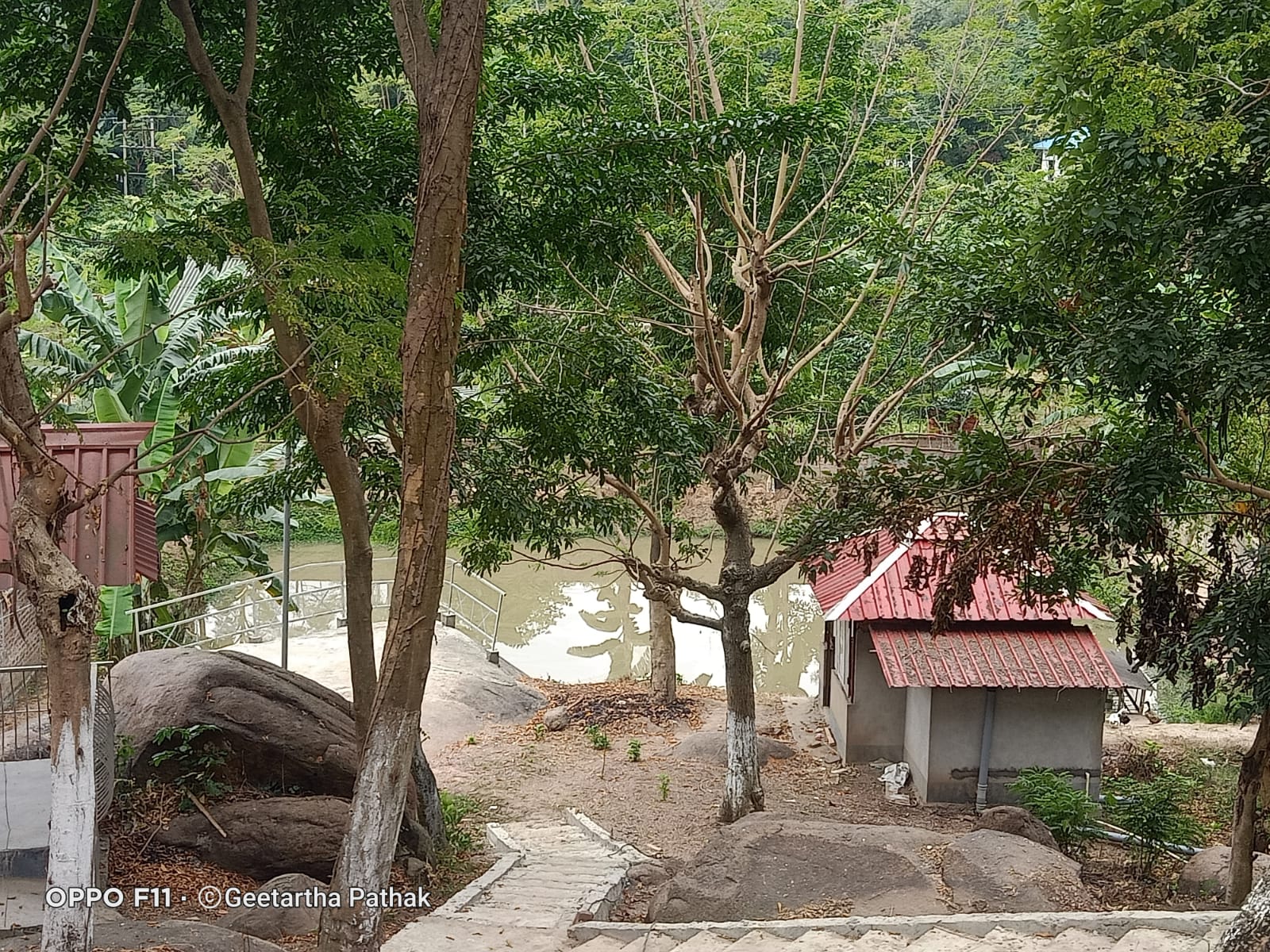
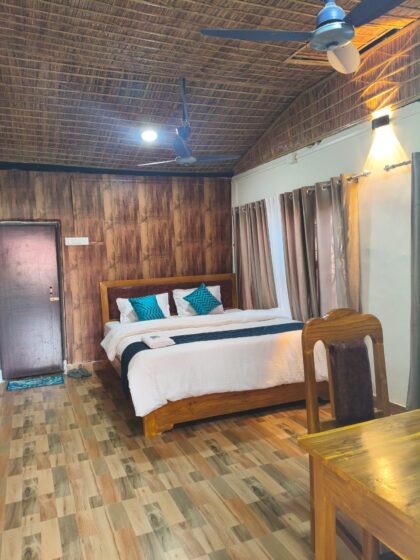
Two New rooms added in the backyard of Silent Rocks. Hill facing with amazing green surroundings. Spacious, AIiry and exotic looks.
News
SOUND OF SILENCE
- THE SOUND OF SILENCE
- By Shruti Sarma
- I was headed to Burha Mayongu to Silent Rocks on a February afternoon. The idea of breaking out of the din of Guwahati even if it was for just two nights with the prospect of seeing birds tingled me.
Thirty minutes into the one-hour drive to our destination, the landscape changed drastically, the road became more serene, with a canopy of trees sheltering the driveway. It then takes a giant turn, driving alongside a hill slope, and opens up to an amazing sight. Amid a teak forest, massive boulders are strewn, rendering the scenery bizarre yet unusually beautiful.
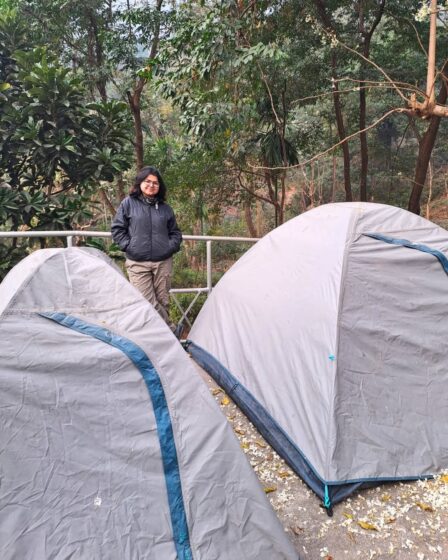
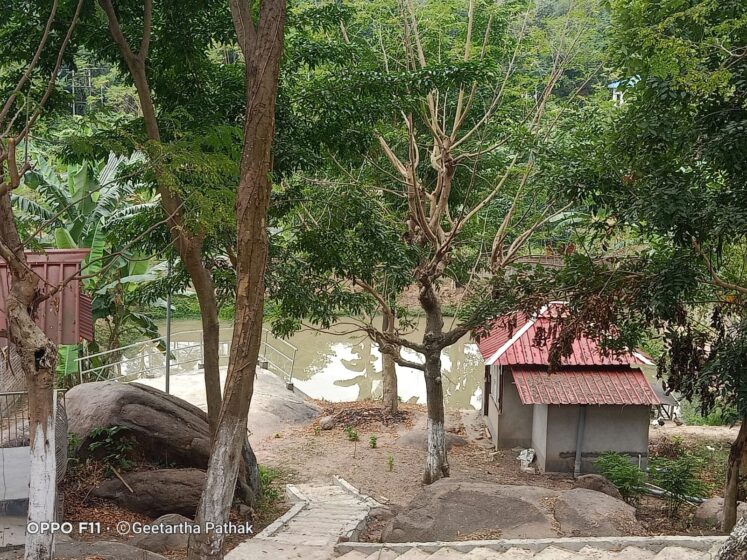
In Burha Mayong, a hundred yards away from the main road lies this unassuming resort (Silent Rocks) on a surreal landscape. The entrance of the main cottage is lined with flowering and foliage plants, and hanging flower pots adorn the roof edge. It has two bedrooms with a common dining area. There are two separate independent single units away from the main cottage, some tents, and a couple of simple gazebos on the rocks. Sufficed with basic amenities the units are clean and comfortable, with no frills attached.
But to create a small haven in that rocky terrain without disturbing/changing the landscape is really remarkable on the part of the owner.
Simple creature comforts apart, what made my visit to this rocky haven worthwhile was its healthy population of beautiful birds. The proximity to Pobitora Wildlife Sanctuary (4 km away), the rich variety of trees on the premise, and the presence of a lush hill range in the periphery bring a wide variety of birds to this place. During my stay of two nights and birdwatching for just 4 hours each day, that too without stepping out of the resort, I recorded nearly 50 different species of birds. And I know for a fact that had I stepped out of the resort even within a square kilometre, that number would have been way bigger. Well, Burha Mayong to Pobitora is just half an hour’s drive.
I couldn’t believe my luck when I saw three lifers within such a limited space and time. The afternoon I reached, a pair of Grey-headed canary flycatchers welcomed me as I stepped onto the balcony of my room that opens up to the hills. The second one – the Common Iora woke me early the next morning with its melodious song. The third — Blossom-headed parakeets, came in a flock of 8-10 chattering as they nibbled away on the moringa (drumstick tree) blossoms.
I saw most of the birds gorging on moringa flowers. They definitely were loving it, but were nibbling far more than they could eat. I noticed that the fallen white blossoms of nearly a dozen trees had blanketed the ground at Silent Rocks and I couldn’t help picking them up as a wave of nostalgia of my childhood days swept over me.
Here are some of the amazing birds I recorded in and around Silent Rocks:
Red jungle fowl, Oriental pied hornbill, Grey-headed canary-flycatcher, Yellow-browed warbler, Yellow-footed green pigeon, Golden-fronted leaf bird, Black-hooded oriole, Chestnut-bellied starling, Jungle myna, Common Iora, Sunbirds, Indian roller, Common hawk cuckoo, Asian koel, Hair-crested drongo, Bronze drongo, Fulvous-breasted woodpecker, Black-rumped flameback, Blue whistling thrush, Rose-ringed parakeet, Alexandrine parakeet, Blossom-headed parakeet, Yellow-bellied fairy fantail, Indian white-eye, Small niltava, Crested serpent eagle, Asian-barred owlet, Oriental scops owl, Blue-throated barbet, Lineated barbet, and more.
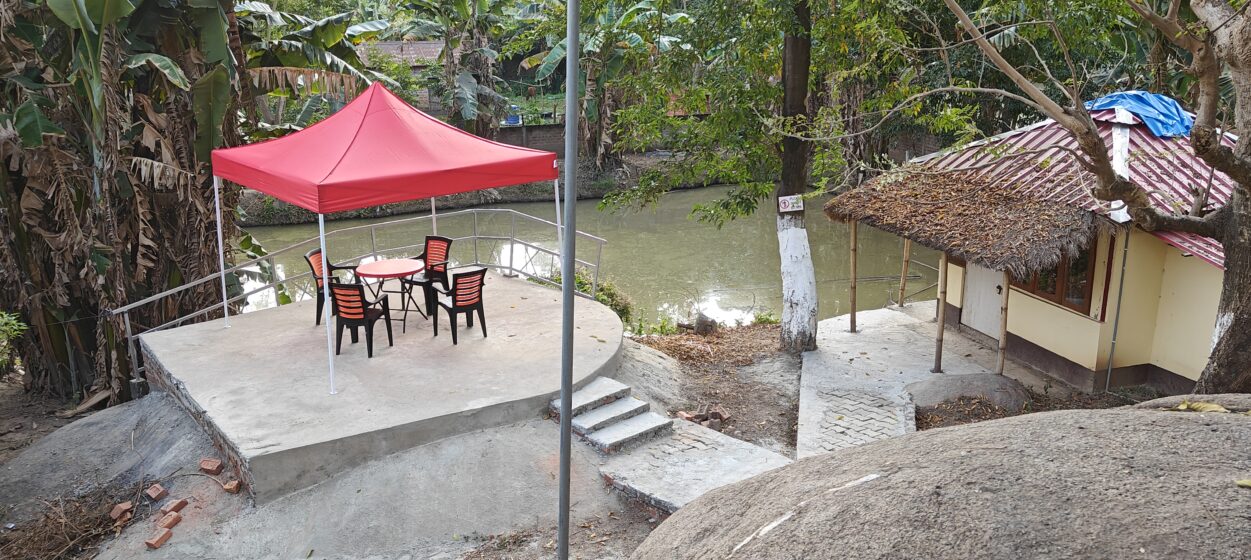
New Patio on the top of a rock inside Silent Rocks
Silent rocks has been restructured and redesigned to suit the taste of our guests. After spring Monsoon is coming . Then look at the green shades and lash green forest behind. The restaurent is ready to serve summer time food to our guests.
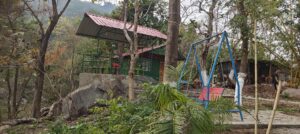
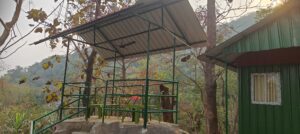
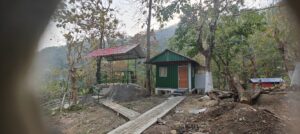
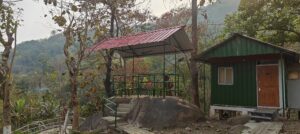
Silent Rocks is ready to host guests this winter with new features
S nee cottage at the bank of the pond below has beed redied for the guests. A new restaurant in an ethnic ambience with sitting capacity of 25 has been set up. The guessts can now choose any item from the manue. They can also customise orders on conditions.
BURHA MAYONG
Silent Rocks at BURHA MAYONG is ready to host guest and tourists this winter with more features and facilities. You can hear the Music of nature amid giant rocks with deafening silence.